

The second day of international play has solidified the First Stand 2026 analysis as a tale of two distinct philosophies. While the LCK continues to prioritize surgical objective control and lane dominance, the Western and South American regions are embroiled in a high-variance struggle for identity. The introduction of the First Stand fearless draft competitive impact has forced teams to dig deeper into their champion pools than ever before. We are no longer seeing the same three power-picks every game; instead, flexibility is the new gold standard. This shift has notably benefitted teams with veteran solo laners who can pilot niche counters, as evidenced by the varied LoL pro picks day 2 where we saw everything from traditional control mages to rare bruiser appearances in the top lane.
The Comparison Matrix: Tactical Execution
In the following matrix, we categorize the performance levels seen during the Day 2 matchups, highlighting the gap between the “S-Tier” execution of the LCK and the developmental “Growth” phase of the LTA representatives.
| Category | Draft Priority | Early Game | Mid-Game | Performance |
|---|---|---|---|---|
| Gen.G (LCK) | Hyper-Scaling & Lane Pressure | Objective Neutralization | 1-3-1 Suffocation | S-Tier |
| LYON (LCS/LTA) | Reactionary Counter-picks | Aggressive Skirmishing | Chaotic Teamfighting | B-Tier |
| JDG (LPL) | Teamfight Combo | Defensive Scaling | Reactive Map Crosses | C-Tier |
The “X-Factor” Analysis: Chovy and the Mid-Lane Gap

When conducting a First Stand 2026 analysis, one name inevitably rises above the rest: Chovy. His performance against JDG wasn’t just about winning; it was about the total denial of the opponent’s win condition.
- Chovy Hwei and Ahri pick efficiency analysis: Across the series, Chovy demonstrated why he is the gold standard for mid-lane efficiency. His Ahri didn’t just find charms; it forced JDG to burn flashes preemptively just by his positioning.
- The Hwei Factor: In the closing game, his Hwei was “unbelievably oppressive,” utilizing the champion’s vast kit to zone JDG off their own towers.
- Chovy mid lane stats: Maintaining near-perfect CS while participating in almost every kill participation (KP), he rendered JDG’s Veigar counter-pick completely irrelevant.
While Chovy provided the fireworks, Ruler Caitlyn pressure international tournament history repeated itself in Game 1. Ruler showcased a “picture-perfect” performance, reminding the world that if you give him an inch in the bot lane, he will take the entire map. His dominance allowed Gen.G to ignore JDG’s Void Grub takes, as the gold lead from towers eclipsed any neutral objective JDG could muster.
Strategic Point Forms: LCS Redemption Strategy Against Brazil
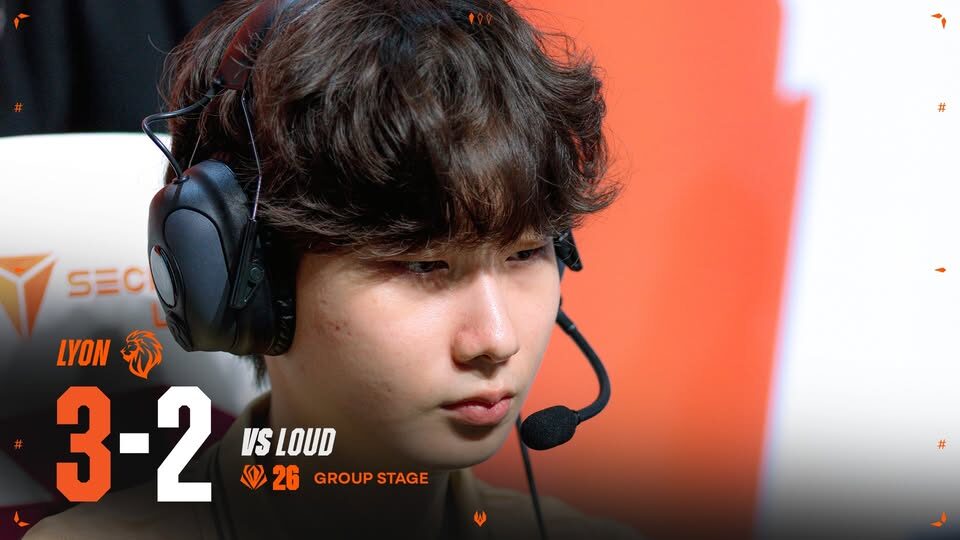
The narrative surrounding the LCS (now part of the LTA) has been one of concern following the Americas Cup failure. However, LYON’s victory over LOUD provided a much-needed LCS redemption strategy against Brazil First Stand fans had been waiting for.
- Jungle Pathing as a Win Condition:
- How Inspired jungling secured series win: Inspired essentially “embodied the jungle,” being present in every lane to neutralize LOUD’s early aggression.
- By focusing on Inspired jungle pathing, LYON was able to funnel resources into Berserker’s Yunara, creating an insurmountable lead in Game 1.
- The “Big Dhokes” Adaptation:
- In a rare Garen sighting, Dhokla used the “Spin to Win” mechanic to counter K’Sante.
- This tactical flexibility is a direct result of the First Stand fearless draft meta, where unconventional picks are becoming the only way to break through stalemates.
- The Viktor Endgame:
- Saint’s “lore-accurate” Viktor in Game 5 dealt triple the damage of Envy’s Vex. This highlighted JDG draft weaknesses exposed by LCK styles—specifically, the failure of the “strange” Vex pick to find value in late-game sieges.
First Stand 2026 Standings & Technical Breakdown

The LYON vs LOUD series tactical breakdown shows a region that is learning from its mistakes. While the Americas Cup saw the LCS lose to Brazilian aggression, LYON showed a more disciplined approach to the mid-game. However, the upcoming Gen.G vs JDG analysis suggests that JDG is in a state of crisis, unable to adapt to the pro meta adaptation First Stand day 2 requirements.
Elite laning · Late-game carry · MVP caliber
Focus: Lane dominance · Skirmishing
Adaptation: Drafts prioritize counters
✓ Rotations · Obj control
✗ Consistency vs LCK
Elite: Macro · Map control · Fights
Style: Early aggression + scaling
Conclusion: A Divide in Class
As we look at the current First Stand standings, the hierarchy is becoming clear. Gen.G is playing a game of chess while the rest of the field is still learning the board. For the LCS, the win over LOUD is a vital morale boost, but the “see-saw” nature of the games suggests there is still significant work to be done before they can challenge the LCK or LPL elites.
The First Stand 2026 analysis will continue tomorrow with Group A, featuring a massive clash between BLG and G2 Esports. If G2 can find the same creative sparks LYON did—but with the mechanical polish of Gen.G—the Western hopes might stay alive. For now, the world is simply watching to see if anyone can even scratch the armor of the Korean champions.


