

Alexander Bublik AO 2026 – The transformation of Alexander Bublik into a consistent Grand Slam threat is one of the most significant analytical shifts of the 2026 season. Historically viewed as a high-variance player, Bublik has streamlined his game, prioritizing high-percentage service locations without sacrificing his trademark unpredictability. This tactical maturity was on full display during the first week in Melbourne, where he displayed a level of discipline in his shot selection that was previously absent. By blending raw power with sophisticated court geometry, he has forced opponents out of their comfort zones, proving that his “Top 10” status is built on a foundation of sound technical adjustments rather than mere flair.
Deconstructing the Alexander Bublik AO 2026 Service Data
The primary engine behind Bublik’s success at Melbourne Park has been his serve, which currently ranks as the most effective delivery in the top half of the draw. In his third-round victory over Tomas Martin Etcheverry, Bublik utilized a “wide-slice” strategy on the Deuce side to open up the court, followed by a flat “T” serve to keep the returner guessing. His ability to maintain a 90% win rate on first-serve points is a byproduct of high placement accuracy rather than just raw velocity. This statistical dominance provides him with a “safety net,” allowing him to take greater risks during return games and pressure the opponent’s delivery.
| Statistical Category | Alexander Bublik (Tournament Avg) | Alex de Minaur (Tournament Avg) |
|---|---|---|
| First Serve Win % | 88% | 76% |
| Aces Per Match | 19.5 | 5.8 |
| Break Points Saved % | 82% | 71% |
| Average 1st Serve Speed | 208 km/h | 192 km/h |
| Unforced Error Ratio | 0.85 (per game) | 0.62 (per game) |
Baseline Neutralization and the Use of Variety
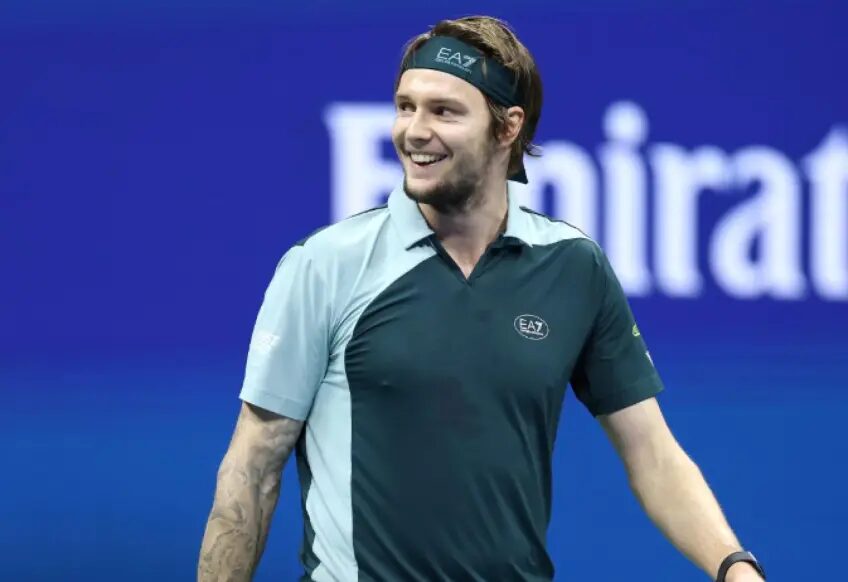
While the serve sets the tone, Bublik’s improved baseline rallies have been the “silent killer” of his 2026 campaign. Unlike previous years where he might pull the trigger too early on a low-percentage winner, he is now demonstrating a willingness to engage in 10+ shot exchanges.
- The Backhand Slice: Bublik is using a low-skidding slice to deny heavy hitters like Etcheverry the “strike zone” height they prefer.
- Drop Shot Integration: He has optimized the timing of his drop shots, moving from “desperation plays” to “tactical lures” that bring baseline grinders into the net.
- Point Construction: His 58 winners in the third round were not just highlight-reel shots but the result of systematic corner-to-corner movement.
Strategic Preview: Neutralizing the Demon’s Speed – Alexander Bublik AO 2026

The upcoming matchup against Alex de Minaur presents a fascinating tactical puzzle for the Alexander Bublik AO 2026 team. De Minaur is arguably the best defensive mover on the ATP Tour, specializing in extended rallies and forced errors. To bypass the “Demon’s” speed, Bublik must employ a “short-point” strategy. By utilizing underarm serves or sudden pace changes, Bublik can prevent De Minaur from establishing the baseline rhythm he needs to thrive. The key metric to watch will be the “average rally length”; if Bublik keeps the points under five shots, his probability of victory increases exponentially based on his current serving form.
Bracket Dynamics and the Path to the Semifinals

With the upset of Andrey Rublev by Francisco Cerundolo, the upper quadrant of the draw has shifted in favor of the high-seeded tacticians. Bublik’s current “unbeatable” hard-court rhythm places him in a unique position where he is no longer reacting to the draw, but dictating it. The tactical flexibility he has shown—switching from a serve-and-volley approach to a heavy baseline game—makes him incredibly difficult to scout. As he eyes a potential quarterfinal against Carlos Alcaraz, the emphasis remains on physical recovery and maintaining the high first-serve percentages that have become the hallmark of his 2026 identity.
Conclusion: The Professional Soldier’s Blueprint
Ultimately, the Alexander Bublik AO 2026 experience is a masterclass in career recalibration. By shifting his focus from “entertainment value” to “tactical efficiency,” he has unlocked a level of consistency that many thought was beyond his reach. The fourth-round clash against De Minaur will be the ultimate test of this new blueprint—a battle between the tour’s best returner and its most improved server. Regardless of the outcome, Bublik has proven that when a maverick mind adopts a professional’s discipline, the result is a formidable contender capable of dismantling the very best in the world.


