

The 2025–26 Ashes series began in the most dramatic fashion imaginable, with 19Wickets in a Day falling across two frantic innings. More than 51,000 fans watched Perth Stadium transform into a cauldron where fast bowlers dictated every moment and batters had little time to settle.
England’s innings of 172 lasted barely 33 overs, while Australia’s response collapsed to 123/9 under the glare of evening lights. The pace was relentless, the bounce unpredictable, and the margin for error almost nonexistent. This was the kind of day that reinforced Test cricket’s ability to surprise even its most seasoned followers.
Starc Sparks Absolute Carnage as 19Wickets in a Day Begins With England’s Collapse
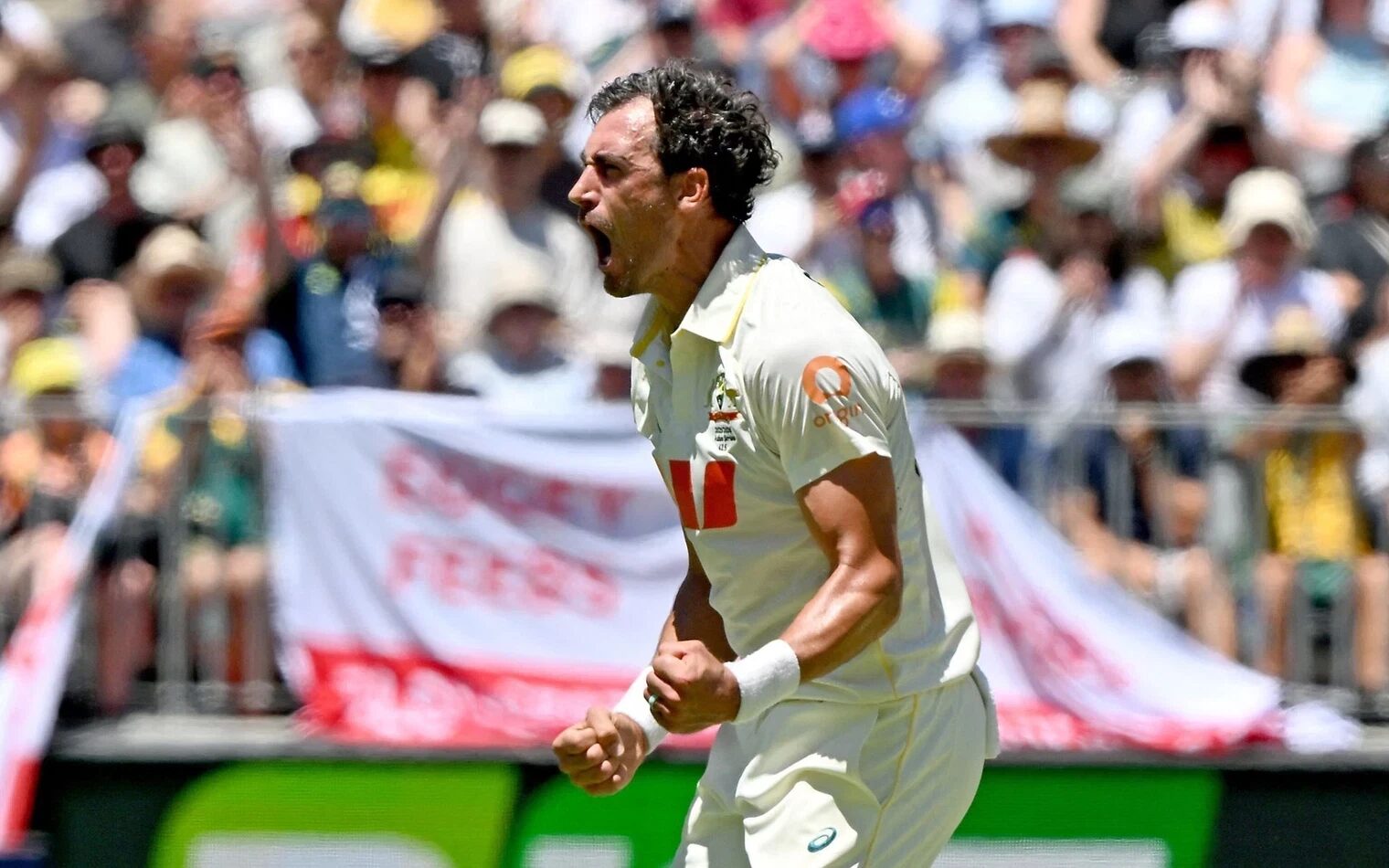
Mitchell Starc delivered a blistering spell that set the tone for the entire day. His 7/58, driven by powerful swing and steep lift, dismantled England’s batting order before they could adjust to the surface. With Cummins and Hazlewood sidelined, Starc embraced the lead role and dominated the morning with confidence.
Day 1 Bowling Overview
| Bowler | Team | Overs | Maidens | Runs | Wickets | Economy |
|---|---|---|---|---|---|---|
| Mitchell Starc | Australia | 16.5 | 3 | 58 | 7 | 3.44 |
| Xavier Doggett | Australia | 8 | 0 | 32 | 1 | 4.00 |
| Scott Boland | Australia | 8 | 0 | 62 | 0 | 7.75 |
| Jofra Archer | England | 8 | 1 | 24 | 2 | 3.00 |
| Brydon Carse | England | 7 | 0 | 22 | 3 | 3.14 |
| Mark Wood | England | 7 | 0 | 29 | 2 | 4.14 |
| Gus Atkinson | England | 7 | 0 | 26 | 2 | 3.71 |
Starc’s early wickets built pressure that England struggled to absorb. Examples of his control included:
- forcing Zak Crawley into a misjudged poke at a delivery climbing above shoulder height
- beating Ben Duckett for pace when he attempted to shuffle across
- trapping Joe Root before Root could find rhythm
A short burst of fight came through Harry Brook’s 40 and Ollie Pope’s crisp strokeplay, but once Brook miscued a pull off Doggett, the remaining wickets disappeared rapidly.
Australia Stumbles Under Lights as England’s Attack Strikes Back

The day’s second collapse unfolded even faster than the first. Australia’s reply under lights saw the ball skid, lift and zip unpredictably. England capitalised immediately.
Jake Weatherald’s debut became a flashpoint—Archer trapped him LBW with a 150 km/h ball that swung just enough to beat the inside edge. The left-hander toppled as he attempted to defend, drawing gasps from the stands.
Marnus Labuschagne’s discomfort was clear. After being struck on the elbow, he misjudged a leave and watched the ball deflect onto his stumps. Steve Smith wore several short balls before edging Carse, leaving Australia exposed early.
Usman Khawaja, returning with back tightness, fell to a sharp rising delivery that brushed his glove. The pattern became unmistakable: hesitation led to edges, and edges led to collapses.
England’s Four-Man Pace Assault and Stokes’ Intervention Transform the Match

England’s bowling strategy revolved around maintaining high tempo through four fast bowlers—Archer, Wood, Atkinson and Carse. Each offered something unique:
- Archer: raw speed, targeting ribs and gloves
- Wood: steep bounce from back-of-a-length
- Atkinson: wobble-seam movement that unsettled the splice
- Carse: relentless channel discipline
However, the defining spell came from Ben Stokes. Reading the moment, he introduced himself and delivered 5 wickets in 6 overs, breaking Australia’s resistance emphatically.
He removed Travis Head with a pull that never got high enough, Cameron Green with a loose cut, Alex Carey with an ambitious uppercut, and Scott Boland with a mistimed drive. The collapse from 5/76 to 9/123 captured the mood perfectly: pressure rewarded the bowling side, and hesitation punished the batting side instantly.
Historical Echoes and Tactical Fallout From a 19Wickets in a Day Spectacle
The scale of the collapse drew immediate historical comparisons. This was the most wickets to fall on Day 1 of an Ashes Test since 1909, and the scenes recalled the 2024 Perth Test where 17 wickets tumbled on the opening day.
Key takeaways shaping analysis:
- Starc reached 100 Ashes wickets, joining elite company
- England’s innings was short but fast-scoring, highlighting their Bazball intent even in tough conditions
- Australia’s top order faltered under lights, especially against hard lengths
- Selection debates reignited—Boland struggled, and Weatherald faced a brutal debut
- England’s decision to go all-seam proved perfectly suited to the pitch
Fans called it “beautiful chaos,” “a day without brakes,” and “Test cricket in overdrive.”
Conclusion: An Ashes Opener Defined by 19Wickets in a Day and Relentless Pace Pressure – 19Wickets in a Day
The 2025–26 Ashes opened with breathtaking intensity. The spectacle of 19Wickets in a Day delivered drama, unpredictability and constant tension. England head into Day 2 with a valuable 49-run lead, but the nature of this Test suggests momentum will continue to shift violently.
If Day 1 is any indication, this series will be decided by pace, discipline and the ability to survive moments when the pitch seems alive.


